Objective
The primary objective of this study was to:
- Explore the preferences of people with acute leukemia for the five health outcomes included in EQ-5D instruments as well as two additional items: tiredness and cognition.
Secondary objectives were to:
- Compare patients’ preferences with general population preferences.
- Examine the HRQoL of patients and contrast this with the general population.
- Explore how patient HRQoL may vary based on different demographic and clinical variables.
Deliverables
When we want to understand or measure someone’s “health-related quality-of-life”, we typically ask them to describe the problems they have with different aspects of their health. In this study, we wanted to understand which aspects, or “dimensions”, of health-related quality-of-life are most important to the general public and to persons with acute leukemia.
- What is the health-related quality of life of people with acute leukemia?

- Which aspects of health-related quality of life matter most to people with acute leukemia?
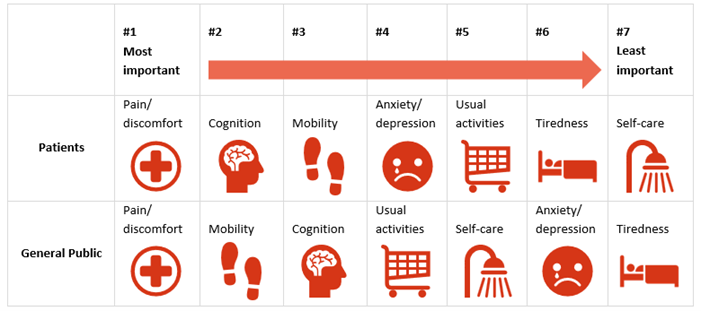
What does this mean?
Improving care for people with acute leukemia means listening closely to what matters most to patients. This goes beyond controlling the disease, it’s also about recognizing and addressing the hidden symptoms that affect daily life. By capturing these experiences in routine care and research, we can make sure treatment strategies and health policies reflect the patient’s voice.
In everyday care
- Treat the whole person, not just the disease
- Pain/discomfort, fatigue, cognition and anxiety/depression should be regularly assessed.
- Early detection of these problems can guide better support and treatment
- Focus where patients focus
- Patients report that tiredness and cognition matter just as much as physical function.
- Making space to discuss these symptoms in clinic visits ensures patients feel heard.
In treatment and research decisions
- Value what improves daily life
- Treatments that control disease, but also reduce fatigue, pain or cognitive difficulties can make a big difference.
- These benefits may not always be captured if decision rely only on “standard” measures.
- Tools must evolve to reflect patient voice
- Adding “bolt-on” questions on cognition and tiredness helps capture what matters most.
- This ensures future studies and health policy decisions take patient priorities into account.
Full report available : https://acuteleuk.org/publications/
Publications
- Understanding the Preferences of People with Acute Leukemia for Different Health Outcomes, Samantha Nier, Sulayman Chowdhury, Chris Skedgel, David Mott (Abstract release date: 05/14/25) EHA Library. Nier S. 06/14/2025; 4161376; PS2302

We have partnered with OHE for this study. For more information, please visit OHE – Health Economics and Outcomes Research