
Spotlight on ALAN members
In 2025, with ALAN support, some of our members have been able to start and/or complete projects which benefit acute leukemia patients and their families. We are very grateful that our support could contribute to make these projects happen.
Acute Leukemia Patient Advocacy Group Thailand
Project Title: Strength in Knowledge, Hope in Action: Empowering Patients & Families Through Knowledge, Connection, and Support
The project helped to develop the Thailand’s first leukemia navigator support program. The project aimed to address the gaps in knowledge, accessible resources, and patient support for acute leukemia patients and caregivers in Thailand
Website Launch: www.thaileukemia.com
- Created and launched a new patient-centered website in Thai.
- The website serves as a knowledge hub, offering:
- Easy-to-understand information about acute leukemia.
- Guidance for newly diagnosed patients.
- Patient rights and questions to ask doctors.
- Stories from other patients and caregivers.
- The site is designed to be mobile-friendly for accessibility, especially in rural areas.
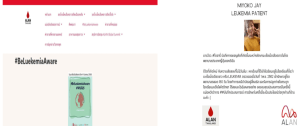
ALAN Thailand Newsletter
- Established and released a regular newsletter in Thai.
- Distributed via email and social media channels to update patients, caregivers, and healthcare providers on leukemia-related knowledge, events, and resources.

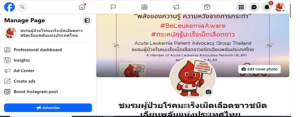
Redesigned Facebook Page
- Revamped the Facebook Page of the Acute Leukemia Patient Advocacy Group Thailand.
- The page is now more visually appealing and easier to navigate, increasing engagement and trust.
- Posts have included translations of ALAN resources, awareness campaigns, and interactive content.
Leaflets and Infographics
- Developed and printed patient education leaflets including:
- “What is Leukemia?” (Thai-language version).
- Infographics summarizing key information.
- Materials were distributed during:
- Patient and caregiver seminars at private companies.
- Awareness sessions at selected hospitals.
- Reached both patients and the general public as per the work plan.

The project “Strength in Knowledge, Hope in Action” has been successfully implemented according to the work plan, meeting its objectives of empowering leukemia patients and their families in Thailand. With ALAN’s support, we have built lasting tools and networks that will continue to provide hope, information, and connection to those who need it most.
Leukemia and Blood Cancer New Zealand
Project title: Education for Acute Leukaemia Patients in New Zealand.
The funding provided by the network is allowing us to develop and distribute clear, accessible, and culturally appropriate educational resources for leukaemia patients and their families to enhance their understanding of the disease, improve decision-making, and support treatment adherence.
Acute Lymphoblastic Leukaemia in Adults
This resource has been comprehensively updated to bring it in line with current medical practice. This has required extensive staff time from our dedicated health literacy coordinator as well as peer reviewed by two local haematologists. The layout of the resource has been refreshed to bring it in line with our other resources. The resource is available online and has been printed and distributed to patients and hospitals around the country.
Acute Lymphoblastic Leukaemia in Children
The resource is available online. We have not yet printed this resource as our Board has recently signed off a rebrand which will be rolled out in the new year and we plan to refresh the look in line with our new brand. This update and print will occur in the new year.
Acute Myeloid Leukaemia
This resource is available online. It is also impacted by the rebrand and we plan to refresh the look in line with our new brand. This update and print will occur in the new year.
Fact sheets:
- Chemo brain
- Supporting a child through a loved one’s cancer diagnosis
We have recently reprinted both of these factsheets and they are available to patients online, and around the hospitals in New Zealand. We also hold copies at our Support Centres around the country and the team will distribute to patients where there is a need.

This project aimed to empower acute leukaemia patients with accessible educational resources to support them throughout their diagnosis, treatment, and recovery. Thank you again to the Acute Leukaemia Advocates Network for their support for this project.
Campaigning for Cancer (South Africa)
Project title: Think Tank and Unheard video project
As part of our ongoing partnership and shared commitment to improving the lives of people affected by leukemia, we would like to reflect on the Leukemia Think Tank that you generously sponsored in 2024. This event formed an important foundation for the work we are doing this year and remains one of the most significant moments in our ongoing efforts to improve the lives of people affected by leukemia. The Think Tank took place on 26-27 September 2024 and brought together a diverse group of participants. This included patients, clinicians, researchers, civil society organisations and government representatives in the same room.
The Think Tank created an open and collaborative space for everyone who attended to discuss the biggest challenges facing people living with Leukemia in South Africa. We were able to gather valuable insights and recommendations that now form the foundation of our ongoing work.
Think Tank participants committed to continued collaboration across several areas, including education and awareness, advocacy and testimonies, research and data collection, healthcare access, and policy changes and have committed to the following action items following this Think Tank:
• Education and awareness: Key priorities include simplifying language, creating patient-friendly materials, developing native-language resources, strengthening primary healthcare awareness, and ensuring consistent messaging across all organisations.
• Advocacy and Testimonials: Stakeholders agree to build a stronger national advocacy network, elevate patient stories on all media platforms, develop a 10-point advocacy plan, and integrate leukemia testing into other disease areas. Outreach strategies should also include traditional healers, pharmacies, churches, and community forums.
• Research and data collection: Participants committed to identifying data gaps, mapping treatment centres, strengthening data capturing in public hospitals, and collaborating on research through networks such as ISPOR and C4C.
• Healthcare access: Discussions highlighted the need for clear treatment guidelines, improved referral pathways, patient-friendly systems and alternative reimbursement models to reduce treatment costs. Participants also stressed that patient experiences and preferences must be included in Health Technology Assessments.
• Collaboration: There was a strong call for regular information-sharing, expert presentations, shared resources, and a framework that enables each stakeholder to contribute according to their strengths. Patient navigators were identified as important individuals for improving coordination across the health system.
The full Think Tank report, which provides more detail on the discussions and findings, can be accessed here: https://acrobat.adobe.com/id/urn:aaid:sc:eu:c9198b04-ee24-4d80-b60d-53983837c66b
Unheard: Leukemia Patient Stories for Change in South Africa
This project creates a documentary video series profiling leukemia patients across South Africa (KZN, Gauteng and North West), highlighting not only the healthcare system gaps but also the psychological and social dimensions of their journeys, how stigma within families, communities, and workplaces—affects patients and decision-makers. This will be disseminated via national media, social platforms, and advocacy channels to amplify patient voices and influence health policy.
HEMA-ONKO (Macedonia)
Project Title: Awareness & Early Diagnosis Support for Blood Cancers in Macedonia
As a national organisation working across all cancers, including all blood cancers, HEMA-ONKO began rolling out activities shortly after receiving funding. Because the project commenced during the summer months traditionally a slower period for healthcare engagement in Macedonia the initial phase focused on planning, coordination, and laying the foundation for the active autumn implementation period.
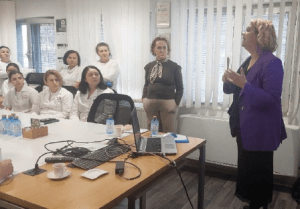
Despite this natural slowdown, we have achieved solid early progress. We delivered patient advocacy training, initiated GP awareness activities, and secured national media visibility to raise awareness of early diagnosis of blood cancers. In parallel, we developed core components of the public awareness campaign, including testimonials, culturally sensitive messaging, and visual materials.
Patient Advocacy Training
We successfully delivered a patient advocacy training workshop focused on:
• volunteer and patient advocate capacity building
• patient rights and early diagnosis pathways
• strengthening communication skills
• supporting All & AML patients
This training created a strong foundation for subsequent project activities
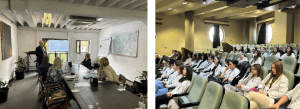
GP Awareness & Education
Two GP roundtable sessions held, approximately 20 GPs reached – more roundtables are expected.
Sessions covered early symptoms of blood cancers, diagnostic delays, referral pathways, and patient needs. These regional sessions broaden the project’s reach and directly support early detection efforts
Media Awareness & Public Engagement
We achieved strong national visibility through:
• radio interviews
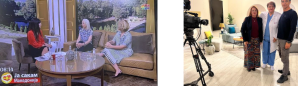
• morning television appearances
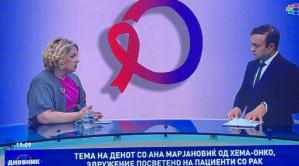
• prime-time news coverage, where blood cancer awareness was highlighted as “Topic of the Day”
• Blood Cancer Awareness Month – Educational Event
This widespread coverage significantly increased awareness of early symptoms and reduced stigma around seeking medical help.
Development of Awareness Materials
• Collection of anonymous patient and caregiver testimonials
• Culturally sensitive messaging
• Visual templates and campaign designs
• Draft social media content
These materials will support a strong awareness campaign launch. Distribution will occur:
•at GP events and the GP Accredited round tables
•through community outreach, and
•within healthcare facilities from January 2026 onward
Through patient advocacy training, GP engagement, and significant national media coverage, the project has already begun raising awareness about early detection of blood cancers and strengthening the capacity of both patients and healthcare providers.