Patient preferences for treatment in relapsed/refractory acute leukemia
November 19, 2025
When acute leukemia relapses, treatment decisions can be complex. Patients may face trade-offs between survival benefits, side effects and how treatment is delivered. This study asked people with acute leukemia across five countries what matters most to them when making these choices.
How did we do it?
- We surveyed 267 patients in the UK, USA, France, Germany, and Italy.
- The survey included a task called a discrete choice experiment (DCE). In the DCE, patients made choices between different hypothetical treatment options.
- The treatments in the DCE were described in terms of how effective they are (the chance of responding, as well as the duration of the response), the impact on quality of life (during and after the treatment), and how the treatment is given (mode of administration).
- The DCE data were analyzed to identify the treatment priorities of people with acute leukemia in the event of a relapse.
What patients told us
The most important factor was how likely the treatments were to work
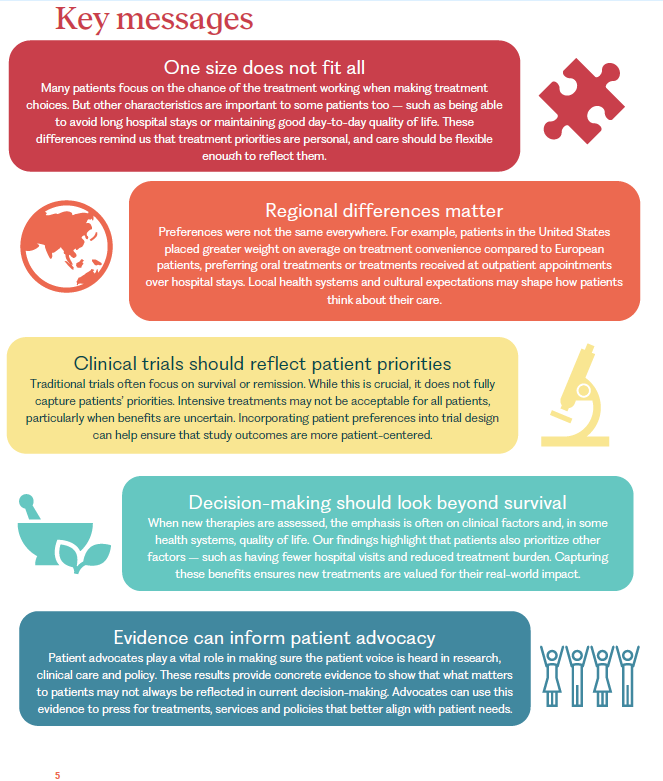
- The chance of responding to treatment was the most important characteristic by a significant margin.
- The second most important was quality of life during response, followed by the duration of response, and quality of life during treatment, respectively.
- Mode of administration was the least important characteristic overall – though it was very important to some people.
Different groups of patients had different treatment priorities
- We identified three distinct groups:
- “Response-focused” (47%) – chance of response was by far their biggest priority compared to other characteristics.
- “Balanced decision-makers” (32%) – all characteristics except the mode of administration were important to this group.
- “Convenience + efficacy focused” (21%) – preferred to avoid hospital stays and prioritized a longer response duration.
Full report available : https://acuteleuk.org/publications/